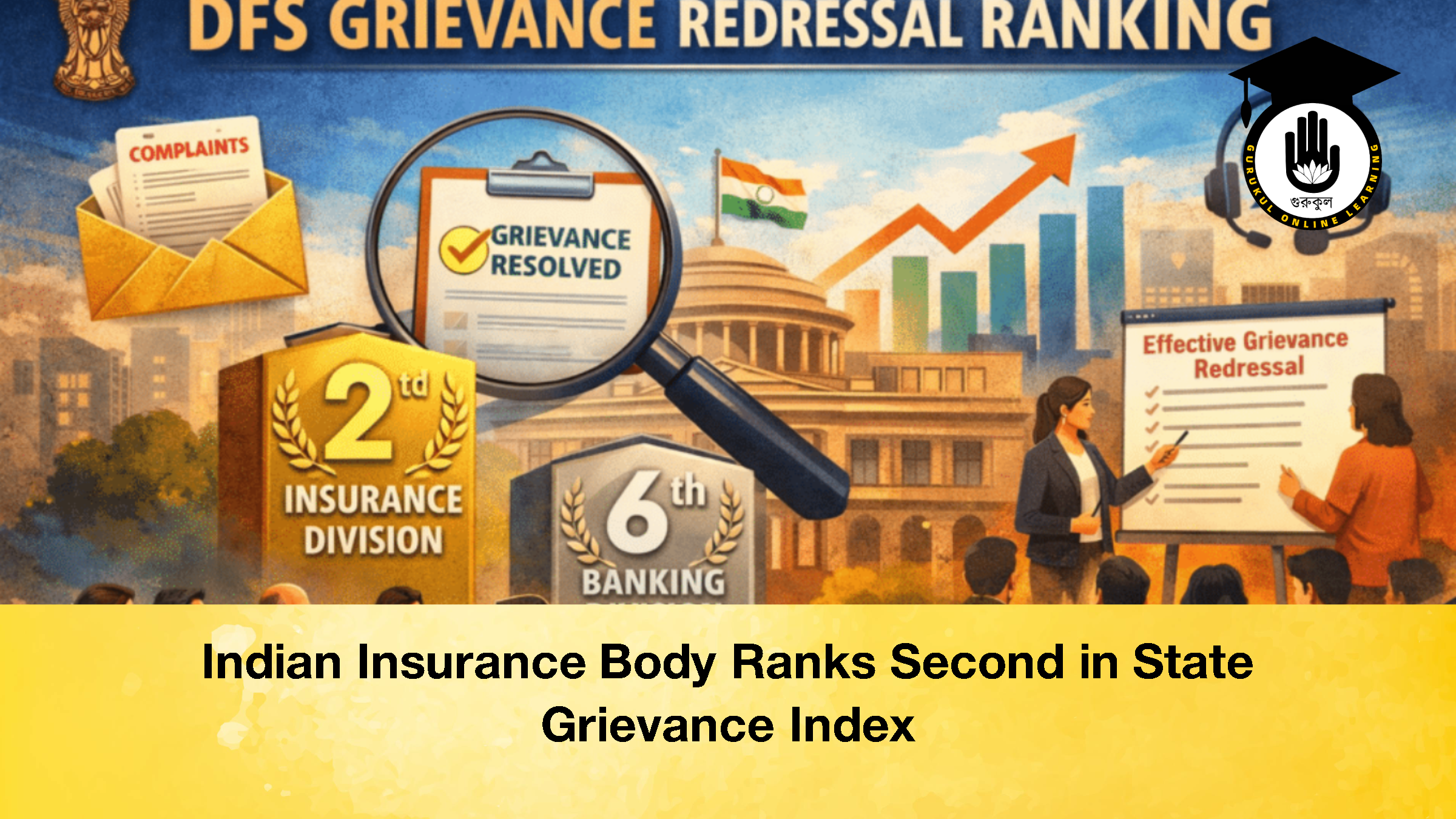
NEW DELHI — India’s Insurance Division, functioning under the aegis of the Department of Financial Services (DFS), has secured the second position within the highly contested Group A category of the central government’s Grievance Redressal Assessment and Index (GRAI) for May 2026. The performance metrics also revealed that the Banking Division under the same department achieved the sixth rank nationwide. This sophisticated institutional index reflects a rigorous performance assessment by federal watchdogs, designed to measure how swiftly and transparently public sector departments resolve citizen complaints.
The Group A classification specifically assesses large-scale ministries and operational departments that handle significant public interaction, requiring a baseline reception of at least 500 public grievances every month. Official statistics released by the DFS outline a massive administrative workload, with both the banking and insurance arms collectively managing in excess of 250,000 public complaints annually. This strong showing is not isolated; both departments have consistently placed within the top ten performing federal entities since the ranking framework was modified in November 2025.
Structural Reforms Drive Administrative Efficiency
Published monthly by the Department of Administrative Reforms and Public Grievances (DARPG), the comprehensive index serves as a primary benchmark for tracking public service efficiency, speed of resolution, and operational accountability. The marked upward trajectory in resolving complex insurance disputes stems from a fundamental pivot in internal monitoring strategies. On 7 January 2024, the Secretary of the Department of Financial Services initiated a hands-on monitoring protocol, mandating the random selection and personal review of 20 active consumer complaints during every assessment cycle.
To ensure deep systemic accountability rather than superficial paperwork fixes, aggrieved citizens are invited to participate directly in high-level evaluation hearings. Complainants sit alongside the chairpersons, managing directors, chief executives, and senior directorates of the implicated financial institutions. This face-to-face dispute infrastructure prevents corporate leadership from overlooking retail grievances, thereby rebuilding consumer trust and raising the standard of qualitative dispute resolution.
Direct engagement between institutional chief executives and everyday consumers has transformed grievance handling from a bureaucratic box-ticking exercise into a genuine mechanism for institutional reform.
Collaborative Classrooms and Root-Cause Focus
Moving beyond the review of individual case files, the DFS has institutionalised collaborative technical workshops with major regulatory authorities across the sub-continent. These ongoing operational sessions bring together the leadership of the Reserve Bank of India (RBI), the Insurance Regulatory and Development Authority of India (IRDAI), the Pension Fund Regulatory and Development Authority (PFRDA), and state-owned commercial banks.
The primary objective of these workshops is to shift institutional focus away from quick, temporary fixes toward rigorous root-cause analysis. By identifying why specific structural issues—such as electronic payment failures, aggressive mis-selling of insurance premium products, or long delays in pension payouts—repeatedly occur, the regulators aim to overhaul foundational backend workflows. The second-place standing of the Insurance Division points to the success of these collaborative strategies, indicating that structured state oversight can dramatically modernise customer service delivery across a fast-expanding financial market.