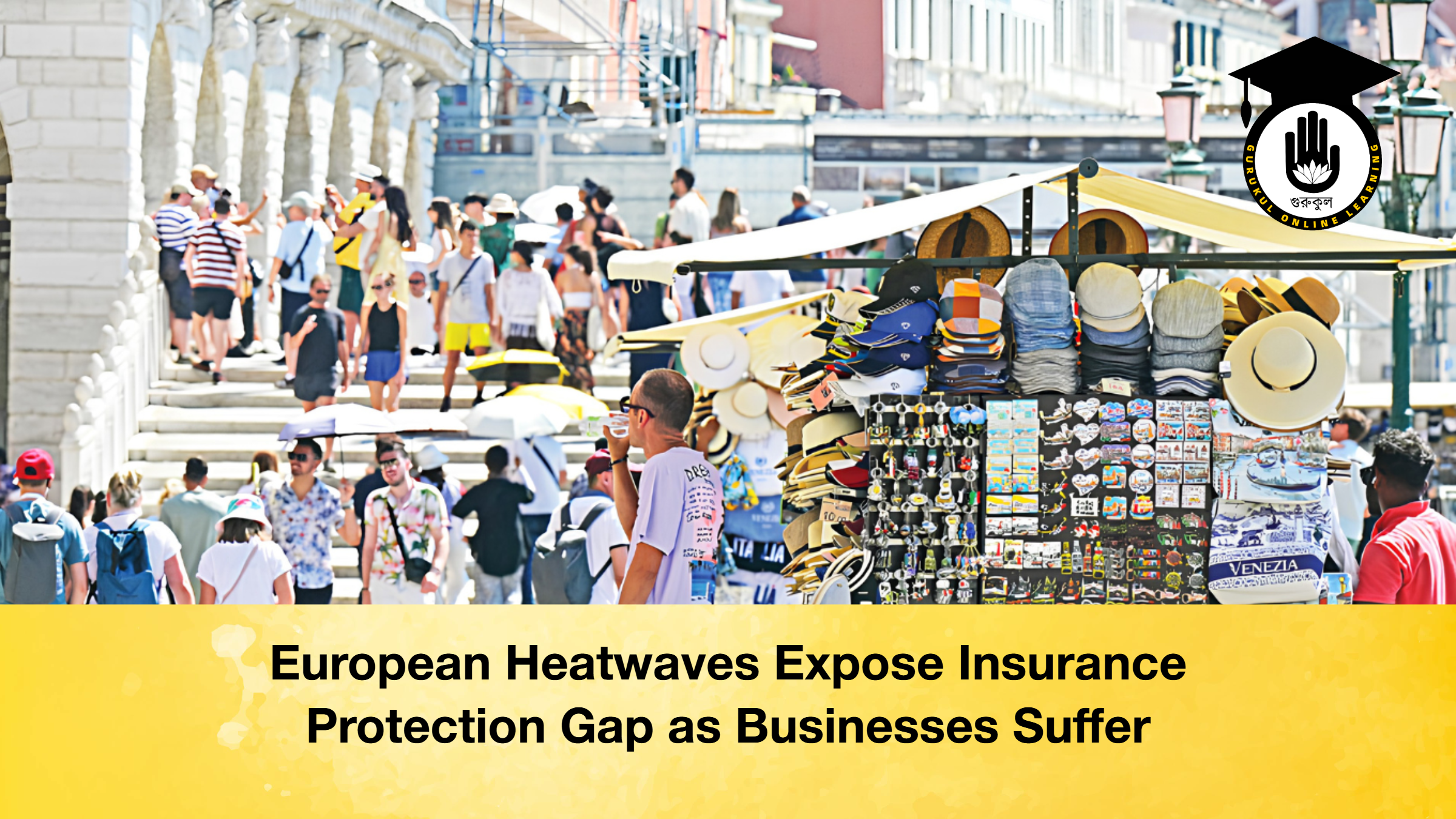
For generations, outdoor cafes in the historic Italian city of Padua have served as vibrant social hubs where residents gather for an early evening drink before dinner. Today, however, as Europe endures its fifth severe heatwave of the year, this traditional social window has vanished. Patrons bypass sunlit terraces in favour of air-conditioned interiors, leaving outdoor seating areas largely deserted and dealing a severe blow to hospitality revenues.
This disruption highlights a wider economic vulnerability across the continent. Extreme temperatures frequently fall outside the scope of traditional business interruption insurance policies, creating a widening protection gap for enterprises of all sizes. According to estimates published by Moody’s, the extreme heatwaves experienced across Europe last summer resulted in roughly €43 billion in lost economic output, while generating a mere €500 million in insured payouts.
Federica Luni, president of the hospitality association APPE Padova, notes that social gatherings now routinely begin much later in the evening. A recent survey encompassing approximately 600 hospitality businesses across Padua and its surrounding province revealed that over 80 percent of establishments experienced turnover drops of around 20 percent during the peak heatwave. For small and medium-sized businesses operating on tight profit margins, a revenue contraction of that magnitude can wipe out earnings entirely.
The economic fallout extends far beyond the hospitality sector, affecting workforce productivity, consumer spending, and operational expenditures across multiple industries. Insurers often find these losses difficult to underwrite because they stem from indirect operational disruptions rather than direct physical damage to property. Unlike sudden natural disasters such as floods or severe storms, heat does not typically shatter walls or submerge infrastructure, yet the financial shock it inflicts on business continuity can be equally devastating.
Data from a 2023 survey commissioned by Europe’s insurance regulator, which polled 9,000 small and medium-sized enterprises, indicates that only 28 percent held business interruption coverage as part of property insurance packages. A mere 17 percent maintained non-damage business interruption protection designed for extraordinary events like strikes. As prolonged heatwaves continue to disrupt railway networks, depress agricultural yields, and inflate factory cooling costs, corporate vulnerability is intensifying. Several major firms—including Swedish shop-fitting provider ITAB Group, Italian cement producer Buzzi, and French payments company Worldline—have already flagged weather-related headwinds in their recent corporate earnings reports.
The inherent complexity of heat stems from its tendency to act as a compound risk, frequently intertwining with drought, water scarcity, and wildfires rather than manifesting as a singular, isolated loss event. This interconnected nature complicates risk modeling and traditional underwriting. The crisis is particularly pronounced in Europe, which scientific assessments identify as the fastest-warming continent globally. Recent climate monitoring data revealed that average temperatures across Western Europe soared nearly 10 degrees Celsius above historical averages for mid-August. Furthermore, environmental disclosure data from CDP indicates that 35 percent of tracked corporations now identify extreme heat as a primary risk driver, heavily concentrated within manufacturing, services, infrastructure, and food-related sectors.
To address this protection deficit, insurance markets are increasingly exploring parametric insurance products. Unlike conventional indemnity-based policies that require exhaustive loss assessments, parametric covers trigger automatic payouts once specific environmental thresholds—such as predetermined temperature spikes—are breached. Industry forecasts project that the European market for parametric insurance will expand significantly over the coming years. While these innovative financial tools are already utilised in agriculture to safeguard against crop and livestock losses, experts see strong potential for their adoption across transport and workforce protection sectors.
Nevertheless, financial compensation alone cannot fully substitute for lost revenue and missed commercial activity. Industry specialists stress that businesses must proactively adapt their operational frameworks. Investing in advanced cooling technologies, redesigning workspaces to improve thermal comfort, and rigorous supply-chain stress testing remain essential strategies for mitigating the escalating costs of climate volatility across Europe.