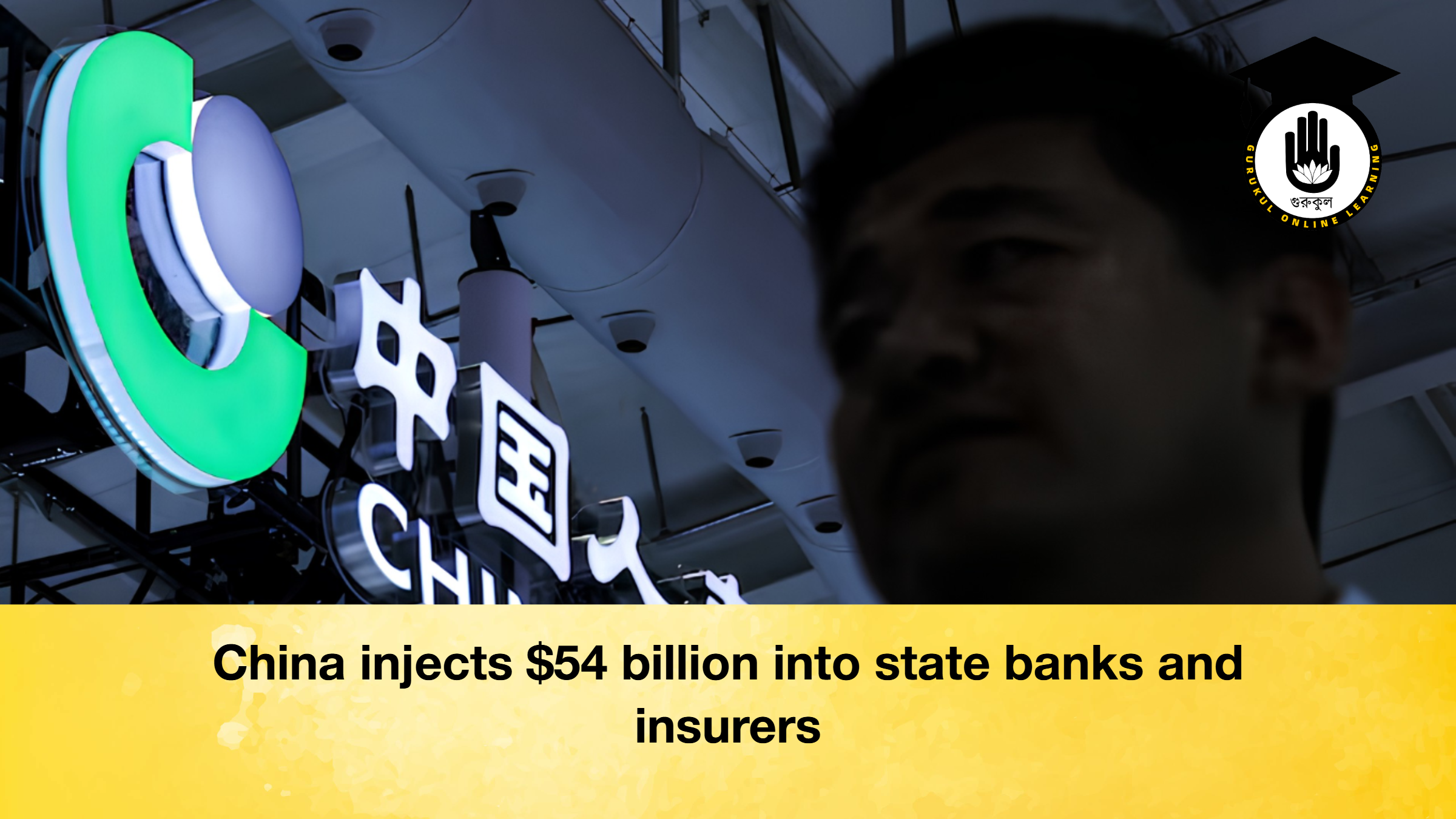
Beijing has launched a sweeping, coordinated intervention to shore up its financial system, with the Ministry of Finance preparing to inject a combined $54 billion into major state-owned banks and insurance corporations. The announcements, made public on Sunday, mark a decisive escalation in government efforts to bolster core capital buffers across the world’s second-largest economy as authorities grapple with persistent economic headwinds and low interest rates.
The insurance sector is set to receive substantial direct capital support to navigate tightening solvency pressures. China Life Insurance Company, the nation’s premier life insurer, will benefit from a 35 billion yuan injection—equivalent to roughly $5.2 billion. Meanwhile, China Taiping Insurance Group is slated to receive 7 billion yuan. Additional bolstering includes a 10 billion yuan core capital injection earmarked for China Export and Credit Insurance Corporation, alongside a 3 billion yuan fundraising initiative by China Reinsurance Group. Furthermore, the People’s Insurance Company of China announced plans to raise up to 15 billion yuan via a private placement of A-shares directed straight to the Finance Ministry.
This state-led capital infusion arrives at a critical juncture for the domestic insurance industry, which has endured compressed profit margins driven by extended periods of low interest rates. Numerous small and mid-sized market players have reported sliding solvency ratios, creating systemic vulnerabilities. By reinforcing the balance sheets of dominant state-backed firms, regulators aim to empower these industry giants to absorb greater market risk, backstop higher-risk smaller entities, and deploy medium- to long-term capital to stabilise domestic equities.
Parallel to the insurance sector overhaul, state-backed lenders are tapping into a major recapitalization framework first introduced during the parliamentary meetings in March. Three major state lenders revealed plans to absorb a combined 290 billion yuan in capital injections. Among them, the Agricultural Bank of China and the Industrial and Commercial Bank of China—two pillars of the nation’s banking architecture—plan to raise up to 160 billion yuan and 100 billion yuan respectively. These funds will be secured through private A-share placements involving the Ministry of Finance and the China National Tobacco Corporation alongside its subsidiaries.
Executives from both banking institutions confirmed that the proceeds will be channeled directly into replenishing core Tier 1 capital. This strategic buffer is designed to maintain robust credit expansion capabilities as Beijing continues to rely heavily on state banks to fuel broader economic growth. Sluggish loan demand has weighed heavily on corporate borrowing, undercutting banking sector profitability and complicating broader economic recovery efforts. With these comprehensive financial injections, Beijing hopes to insulate its vital economic pillars from deepening external and domestic shocks.