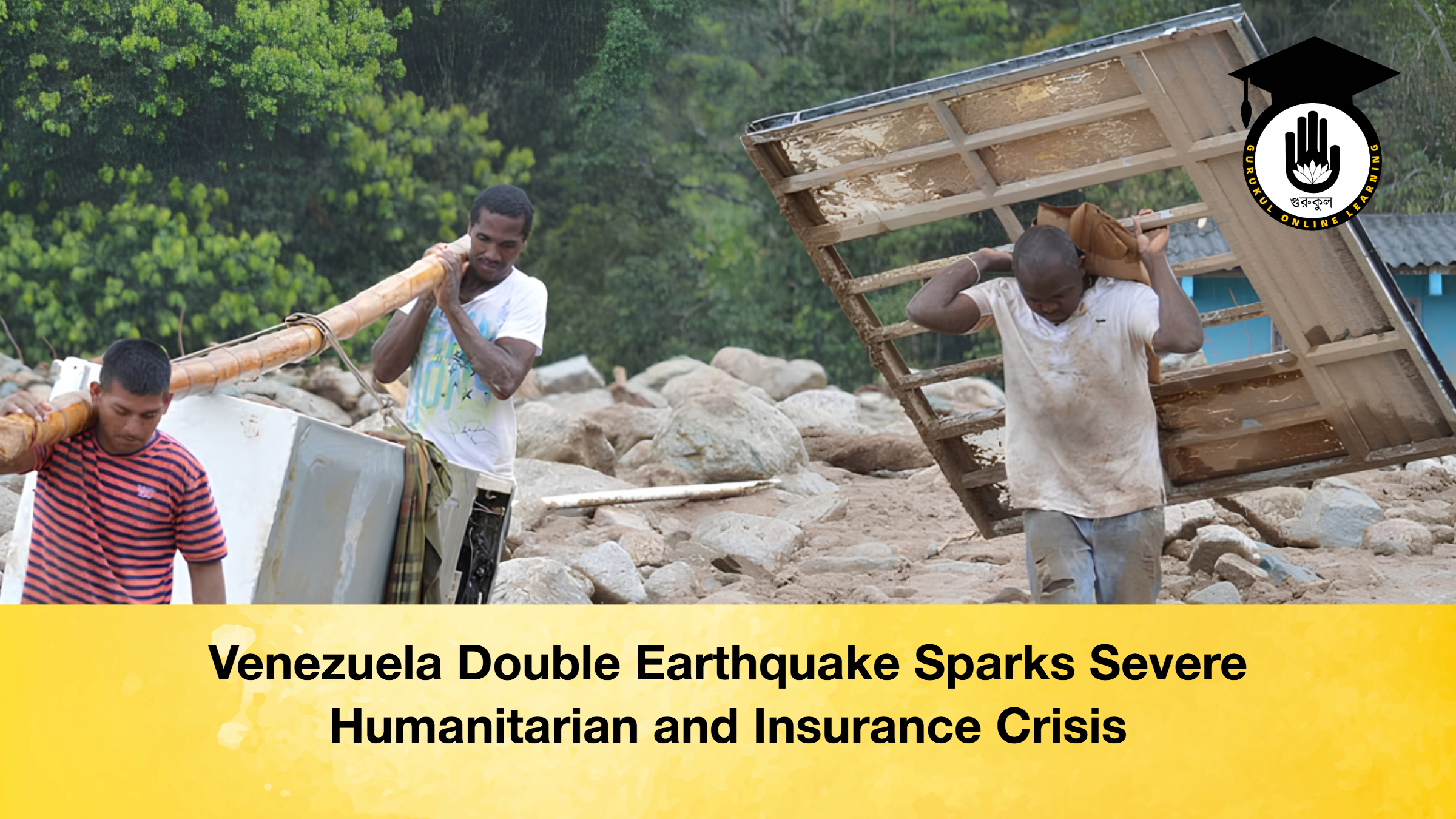
Venezuela has been devastated by two consecutive and exceptionally powerful earthquakes that struck in rapid succession. A 7.2-magnitude tremor initialised the disaster, followed less than 40 seconds later by a massive 7.5-magnitude quake. This brief window left local authorities and residents entirely unable to cope, causing the situation to spiral out of control almost immediately. According to data from the United States Geological Survey (USGS), the seismic event was an shallow strike-slip earthquake. Because the rupture occurred near the surface, the destructive energy travelled directly upward with minimal dampening, accelerating the scale of surface damage. In the days following the main tremors, over a hundred aftershocks have been registered, severely complicating search and rescue operations whilst delaying vital recovery infrastructure programmes.
A preliminary evaluation by the catastrophe risk-modelling firm Verisk indicates that total economic losses could comfortably exceed 10 billion dollars. However, how much of this multi-billion-dollar toll is protected by insurance coverage remains deeply ambiguous. This profound uncertainty is creating significant financial anxiety within Venezuela, whilst simultaneously placing immense pressure on the global reinsurance market, which ultimately backs local insurers.
Satellite analysis has illuminated the vast extent of the architectural devastation. Over 58,000 buildings have suffered substantial damage or total collapse, comprising residential complexes, major hospital facilities, primary road networks, airports, and centralised water and electricity grids. The brunt of the destruction is concentrated in densely populated and economically vital centres, including Caracas, La Guaira, Puerto Cabello, Valencia, and Petare.
The human cost of this disaster is catastrophic. Estimates suggest that the death toll lies somewhere between 1,900 and upwards of 3,300 individuals. Furthermore, injuries have surpassed 10,000, with many citizens still reported missing beneath the rubble. The United Nations reports that approximately 6.8 million people are now completely dependent on emergency assistance. Demands for food, clean drinking water, medical supplies, and temporary shelter are rising exponentially, pushing the nation towards a protracted humanitarian emergency.
Compounding the disaster is Venezuela’s pre-existing economic instability. Hyperinflation, severe currency volatility, and an over-reliance on oil revenues had already restricted the government’s fiscal capacity to rebuild public infrastructure. This earthquake has effectively delivered a heavy blow to an already fragile economic framework.
The domestic insurance sector reflects these harsh structural realities. Although Venezuela has between 30 and 40 active insurance firms, the market remains small and highly fragmented. While the national regulatory authority, Sudeaseg, remains functional, its operational capabilities have been heavily constrained by broader macroeconomic pressure and international sanctions. Crucially, insurance penetration in Venezuela stands at a mere 1% to 2%, leaving the vast majority of the population entirely exposed without any financial safety net.
Major domestic insurers, including Mercantil Seguros, Mapfre Venezuela, Seguros Caracas, and Seguros Horizonte, simply lack the capital reserves and institutional mechanisms to process claims of this magnitude. A precarious combination of low initial coverage, reinsurance disputes, and complex asset valuation issues in a volatile currency environment has further compounded the crisis. This earthquake is no longer just a natural disaster; it has evolved into a severe economic shock, a desperate humanitarian crisis, and a stark exposure of institutional insurance limitations.